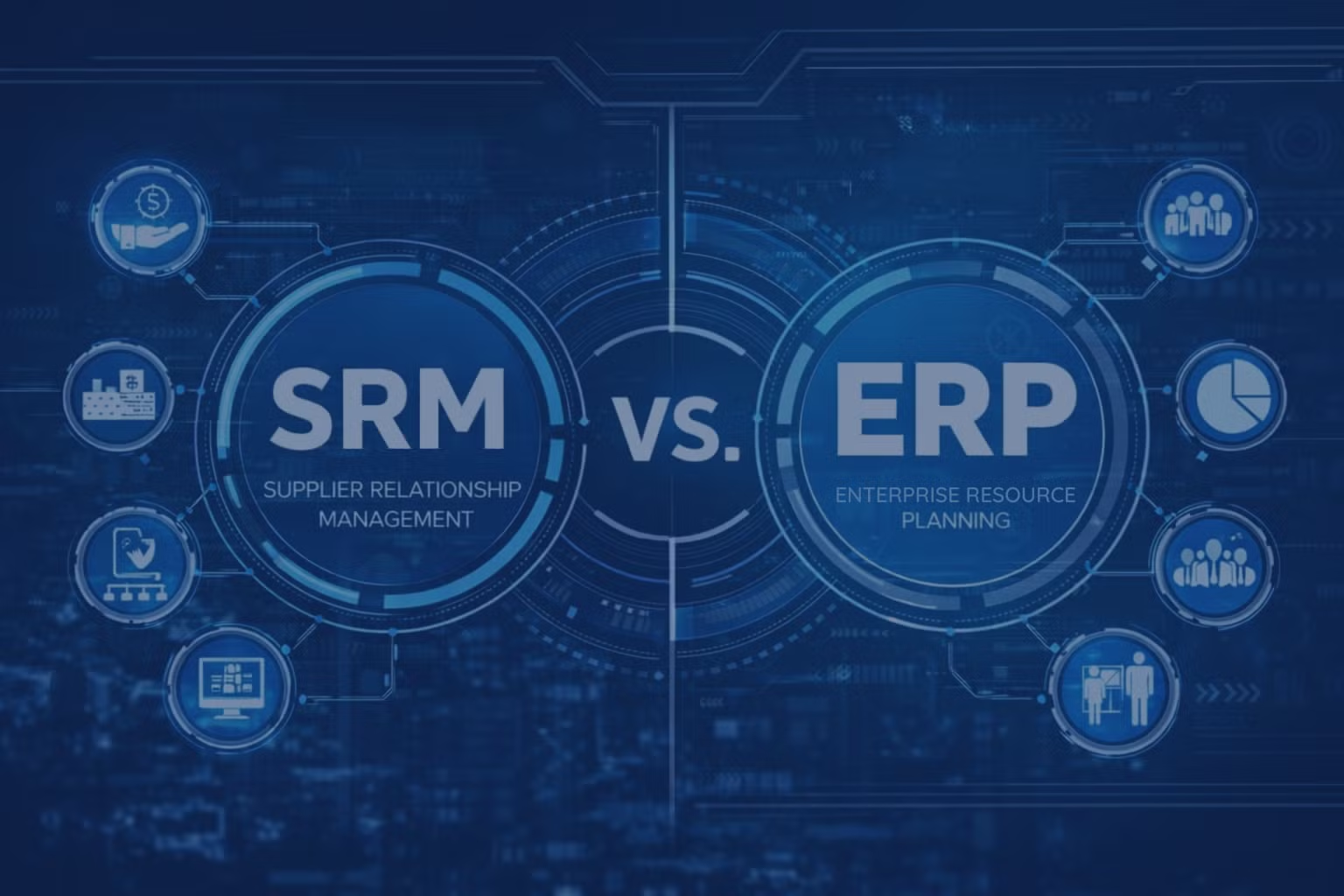
Supplier data often ranks among procurement’s most critical performance drivers. Yet many organizations still rely exclusively on their ERP to centralize this strategic information.
While ERPs are essential for running business operations, they weren’t designed to address procurement’s specific requirements: performance management, risk analysis, regulatory compliance, or strategic supplier collaboration.
This is where SRM (Supplier Relationship Management) solutions come in, offering specialized tools that transform supplier data management into a genuine strategic lever.
This article explores the structural limitations of ERPs for supplier data management and the concrete advantages SRM solutions deliver to procurement teams seeking greater efficiency.
1. Why an ERP isn’t the right tool to manage your supplier data
A tool built for transactions, not relationships
ERPs excel at managing financial and operational flows: orders, invoices, payments, and inventory. Their DNA is transactional and financial.
Managing supplier data, however, requires a more comprehensive and cross functional approach to ensure:
- Continuous collection and updates of supplier information
- Complance documentation tracking (GDPR, CSR, certifications, legal documents)
- Quantitative and qualitative performance evaluation
- Risk mapping (geographic, financial, dependency, CSR, etc.)
In an ERP, supplier data often remains static, incomplete, and rarely updated.
Fragmented and unreliable data
Within ERPs, supplier information is typically scattered across multiple modules: the supplier master data repository, order history in the procurement module, and invoices and payments in accounting.
This fragmentation creates multiple challenges: unidentified duplicates, no consolidated view of suppliers, and limited information sharing between procurement, quality, legal, and logistics teams.
According to the 2025 Ardent Partners study, 92% of procurement leaders consider supplier data quality critical to their performance. Yet they acknowledge that only 64% of their data is truly accurate, complete, and current.
Supplier collaboration: the missing link
ERPs are internal systems. They don’t offer features that enable effective supplier interaction for administrative updates or evaluation questionnaires, for example.
This absence of collaborative tools impacts procurement team productivity, forcing them to manage time-consuming email exchanges and manual follow-ups.
Limited analytical and performance management capabilities
ERPs provide accounting and operational dashboards but rarely offer reporting on supplier repositories, dependency risk mapping, or supplier scoring.
Additionally, ERP data primarily covers already-registered suppliers and doesn’t support managing alternative suppliers.
To extract this information, procurement teams must juggle Excel exports, SQL queries, and manual reprocessing, a considerable time drain that pulls them away from their core function.
2. The advantages of an SRM for supplier data management
A centralized, complete, and reliable supplier database
An SRM’s primary function is to centralize all supplier information in a single, structured repository:
- Administrative and financial data
- Legal documents and certifications
- Scoring and evaluations
- Communication and dispute history
- Contracts and negotiated terms
This single source of truth guarantees the three fundamental pillars of data quality:
- Reliability: validated and current data
- Accessibility: information available to all stakeholders (procurement, finance, legal, quality, etc.)
- Traceability: complete history of sources and modifications
Seamless collaboration with suppliers
Most SRM solutions integrate a collaborative portal that gives suppliers a single access point to:
- Submit documents
- Complete qualification and evaluation forms
- Review their performance and improvement opportunities
- Share production schedules
This shared space reduces data entry errors during supplier creation or updates.
The most advanced SRM solutions also provide connectors to databases like Altares, Ecovadis, and Approval, offering a 360-degree view of suppliers.
Automated data collection and validation
SRM solutions automate numerous low-value tasks such as:
- SIRET/SIREN number verification to prevent duplicates
- Bank account data consistency checks
- Mandatory document validation (corporate registration, tax and social security certificates, insurance, CSR certifications)
- Automated reminders for missing or expired documents
- Compliance report generation for audits
The impact is easily measurable: administrative workload typically drops by 60-80%, while compliance with evolving regulatory requirements (GDPR, CSR reporting standards, e-invoicing mandates, anti-corruption frameworks) becomes systematic rather than reactive.
Analytics that transfom data into decisions
Unlike ERPs, SRMs provide dashboards and analytical tools genuinely dedicated to procurement functions:
- Risk mapping: identification of critical suppliers, sensitive geographic zones, dependency situations, etc.
- Scoring: supplier evaluation on quality, lead times, innovation, CSR, financial health
- Panel segmentation: classification by category, identification of negotiation levers
- CSR and duty of care reporting: tracking of environmental and social commitments
These analyses enable procurement teams to make informed decisions, mitigate risks, and demonstrate the value created by their function.
Flexibility and innovation
SRMs adapt easily to organizational changes: restructurings, buyer portfolio changes, M&A transactions, agility that ERPs, by nature rigid, struggle to deliver.
Additionally, SRM vendors maintain product roadmaps that integrate numerous innovations, particularly from generative and agentic AI. Most of these developments originate from user requests, ensuring complete alignment with procurement teams’ needs.
IT departments also recognize SRM benefits for interface management, as these solutions include integration bundles with numerous market ERPs. Version upgrade management is also less complex than with ERPs.
SRM and ERP: perfect complementarity
In conclusion, SRMs don’t replace ERPs. These tools are fully complementary, addressing distinct but interconnected challenges.
ERPs are essential for managing your company’s transactional and financial flows.
SRMs, meanwhile, deliver the specialized business capabilities procurement teams need to manage supplier relationships and procurement performance. By adopting an SRM, procurement leaders transform
supplier management into a value creation lever.
Looking to optimize your supplier data management or explore how an SRM solution could support your organization?
Fluxym’s experts are here to help
Contact us to discuss your needs:
hbspt.forms.create({ portalId: “26096000”, formId: “8677b60a-1084-4a1f-8197-93ee6d52ff72” });